


t’s long been known that nature has healing powers—physical, mental and emotional. The concept, termed biophilia, maintains that humans are naturally drawn to nature and that, with it, they can overcome a variety of problems related to health. Indeed, a study published in the International Journal of Environmental Research and Public Health confirms that the concept of biophilia has merit. It follows then, that healthcare design with nature elements can aid in boosting patient health.
In this post, we will examine the health benefits of nature as studied by a many organizations and individuals. We will also discuss and provide examples of a number of ways to incorporate nature in healthcare design in order to improve patient health and the overall patient experience.
Biophilia: Nature’s health benefits
E.O. Wilson, in 1984, introduced the concept of biophilia, which directly translates to “love of life.” Wilson argued that humans have a natural affinity for living things. Following from this is the idea that the presence of nature provides humans with feelings of peace and happiness.
Numerous studies have been conducted since 1984 to examine the supposed health benefits of nature. One study by Bjorn Grinde and Grete Patil confirms findings that “there is a positive link between health indicators and living close to Nature.” Findings suggest that nature results in reduced stress, improved attention, positive mental restoration and increased longevity and self-reported health, according to the study.
The reduction of stress is perhaps the most important factor in the study, as, as has previously been discussed, stress plays a great role in overall health. The lower a person’s stress levels, the less energy and resources used to support the body, allowing the body to be more alert and responsive to other health risks.
The previously discussed study concludes that while nature evokes these health benefits in a number of ways, simply the sight of nature accounts for much of the benefit.
“Nature appears to have qualities useful for stress relief, mental restoration, and improved mood simply by being consciously or unconsciously “pleasing to the eye.”
—Grinde and Patil
Other studies confirm these results. A compilation of studies by the Northern Research Station and the United States Department of Agriculture discuss both the health benefits of nature and ways to optimize these benefits. “Using knowledge of our affinity for nature,” Judith Heerwagen said in Biophilia, Health, and Well-being, “we can generate experiences of health and wellness through the environments we create. Work environments can become both more relaxed and productive, homes more harmonious, and public spaces can become more inclusive; offering a sense of belonging, security, and even celebration to a wider cross section of people.”
Healthcare design with nature
Because it’s proven that human interaction with nature can lower stress, improve mental restoration and boost overall health, it follows that the presences of nature in healthcare design can promote feelings of wellbeing. Thus, it is only logical for healthcare designers to take this information into account when creating healthcare facilities. As John Oberlin of Healthcare Design Magazine said, “With nature’s effects on healing and lowering stress, biophilia has far-reaching implications for healthcare design.”
There are a number of ways designers can incorporate nature in healthcare design, both on the interior and the exterior.
Interior
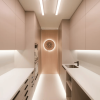
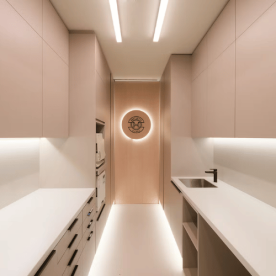
Paint walls natural, earthy colors such as greens and browns
Image via Interior Design
2. Place natural elements such as trees and plants throughout the facility
3. Create spaces that mimic patterns of nature, such as blue hallways that allude to rivers

Image via Healthcare Design Magazine
4. Include large windows throughout the facility to allow plenty of sunlight

Image via Arch Daily
5. Accessorize seating areas and patient rooms with natural-colored furniture
6. Incorporate natural elements with wall decals
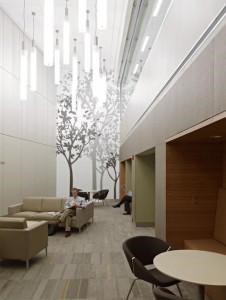
Image via Healthcare Design Magazine
7. Create wide, open spaces that combine many of these elements to simulate an outdoor experience
Exterior
1. Create large outdoor seating areas with abundant light for patients

Image via Healthcare Design Magazine
2. Plants trees, grow grass and maintain gardens outside of patient rooms
3. Include open outdoor family areas with natural elements for relaxation and healing

Image via Interactive Play
4. Paint exteriors in bright, natural colors
5. Develop walking trails and gardens for patients to enjoy when possible
The benefits of nature in healthcare design
There are countless other ways to include nature in healthcare design both indoors and outdoors, and doing so provides a number of benefits. By giving patients large windows with beautiful outdoor views, painting walls colors that evoke a sense of environmentalism, including open outdoor seating areas, planting gardens and trees around the facility premises and more, designers can create environments that make patients feel more connected with nature, thereby reducing their stress.
It’s important to create such calm-inducing environments as patients need plenty of rest and resources to heal. The less stressed they are, the most resources their body has to aid in the healing process.
Keeping biophilia in mind when designing healthcare facilities is therefore very important for designers and architects alike. Creating healthcare design with nature not only aids in the healing process; it ensures a better patient experience.